



Table Of Contents



Every two years, people around the world come together to watch incredible athletes compete on the biggest stages in sports. You’ve heard of the Olympics, Paralympics, and Special Olympics, but do your students know that each competition serves different athletes and has different goals? Understanding these events helps us better celebrate human determination, global respect, and that sports are for everyone!
The Olympic Games
The Olympic Games are the most well-known international sporting event in the world. They feature athletes who compete at the highest level. The event dates back to ancient Greece and emphasizes values like excellence, respect, and friendship between nations.
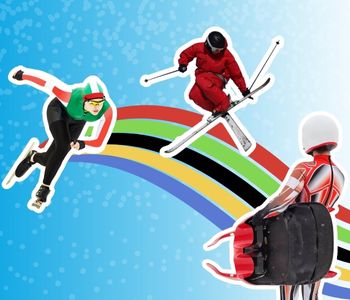
In 2026, Italy is hosting the Winter Games, where athletes will compete in 16 different sports, such as skiing, snowboarding, ice hockey, figure skating, and curling.
- Who competes? elite athletes who qualify through national and international competitions
- When do they happen? every four years, with Summer and Winter Games alternating every two years
- Focus: excellence, respect, and friendship
The Paralympic Games
The Paralympic Games always take place shortly after the Olympic Games and are hosted in the same city. This event showcases elite athletes who live with physical disabilities. In fact, the word Paralympic comes from the Greek word para, meaning beside or alongside, illustrating that the Paralympics are parallel to the Olympics.
These games date back to 1948, when Dr. Ludwig Guttmann organized a sports competition for British World War II veterans with spinal cord injuries. The first official Paralympic Games happened in 1960.
This competition highlights that disability does not limit excellence. The 2026 Winter Paralympics have six sports: para alpine skiing, para biathlon, para cross-country skiing, para ice hockey, para snowboarding, and wheelchair curling. Athletes compete in five impairment groups: amputee, cerebral palsy, visual impairment, spinal cord injuries, and les autres (athletes who do not fit into the other categories).
- Who competes? athletes who meet strict qualification standards
- When do they happen? every four years, with Summer and Winter Games alternating every two years, right after the Olympic Games
- Focus: determination, equality, inspiration, and courage
The Special Olympics
The Special Olympics are different from both the Olympics and Paralympics. They focus on athletes with intellectual disabilities and emphasize participation, confidence, and community.
Unlike the Olympics and Paralympics, athletes do not need to qualify through elite competition. Everyone is welcome, and many events group athletes by ability so all participants can succeed.
The first Special Olympics was held in 1968 in Chicago, IL. It focused on people’s ability, seeking to destigmatize disability. Today, more than one million athletes participate annually in around 20,000 meets worldwide. Before the games begin, athletes take an oath that gladiators used in ancient Rome: “Let me win. But if I cannot win, let me be brave in the attempt.”
- Who competes? children and adults with intellectual disabilities, at all ability levels
- When do they happen? year-round local, national, and world events; the World Games are every two years, alternating between winter and summer sports
- Focus: inclusion, personal growth, and joy in sports
Why All Three Matter
Together, the Olympics, Paralympics, and Special Olympics show that sports are for everyone. They challenge stereotypes and inspire people of all abilities to stay active and confident. Whether it’s a world record, a personal best, or simply the joy of finishing a race, every achievement deserves celebration.
Olympics in the Classroom
In many ways, the Olympic Games reflect the state of the world, the global reach of sports, and athletic diversity. Bring Olympic spirit to the classroom with these open-access Teach Britannica resources that spark meaningful discussions, inspire curiosity, and build critical thinkers.
Jigsaw Strategy
Grades 3–12
Mirror the collaborative spirit of the Olympics as each “team” contributes unique knowledge to a shared goal.
Portrait Sorting and Analysis Strategy
Grades K–12
Build understanding of global diversity by analyzing images of athletes from different nations.
Human Continuum Strategy
Grades K–12
Reflect on fairness, inclusion, and competition in sports.
Sports are not just about winning medals—they’re about effort, teamwork, and believing in yourself. The Olympics, Paralympics, and Special Olympics each remind us that greatness comes in many forms.

About the Author
Christopher Heintz
Customer Experience Director
Chris began his career in education as a high school social studies teacher in Chicago. Since then, he’s served in various roles in education management helping teachers navigate the complex world of assessments, data, curriculum, and instruction. Throughout it all, he’s been dedicated to one thing—providing teachers with the tools they need to create positive outcomes for the students in their care!

Recent Posts

Trust Comes First: What Teachers Really Want from AI ✨
Read More: Trust Comes First: What Teachers Really Want from AI ✨
Olympic History Quiz: Go for Gold 🥇
Read More: Olympic History Quiz: Go for Gold 🥇
6 Biographical Classroom Strategies to Honor Black History
Read More: 6 Biographical Classroom Strategies to Honor Black History
Join Our Newsletter
From tips and tricks to engaging activities, find
attention-grabbing content for tomorrow’s lesson.