




Table Of Contents


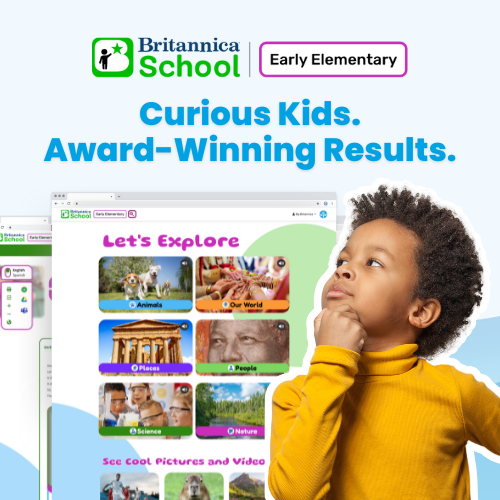

In honor of Hispanic Heritage Month, delve into the rich tapestry of Hispanic and Latinx culture with interactive activities, curated Britannica lessons, graphic organizers, and more. This engaging lesson plan is designed to help students expand their horizons as they research different traditions, customs, and cultures, then present their findings and share a fun cultural artifact with the class.
Spotlight on Latin America
People living in the United States who are descendants of Spanish-speaking peoples are known as Hispanic Americans or Hispanics. Since most Hispanics trace their ancestry to Latin America, they are also often called Latinos/Latinas/Latinxs.
This highly diverse group includes people with roots in Mexico, Puerto Rico, Cuba, El Salvador, the Dominican Republic, Guatemala, Colombia, Honduras, other parts of Central and South America, and the Caribbean.

Weave a Cultural Tapestry
1. Become New Explorers
Investigate cultural elements of Hispanic American communities, highlighting some of the countries mentioned above. Students will begin their Latin American journey in Britannica School, where they can explore nonfiction articles on a variety of cultural topics, from ancient civilizations to pop music. As your students browse, ask them to save the articles they find most interesting.
💡 Use the “related topics” tab to discover more articles, ebooks, and credible websites related to your search.
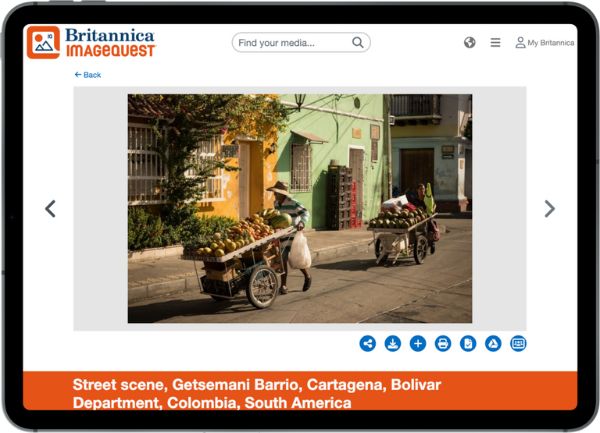
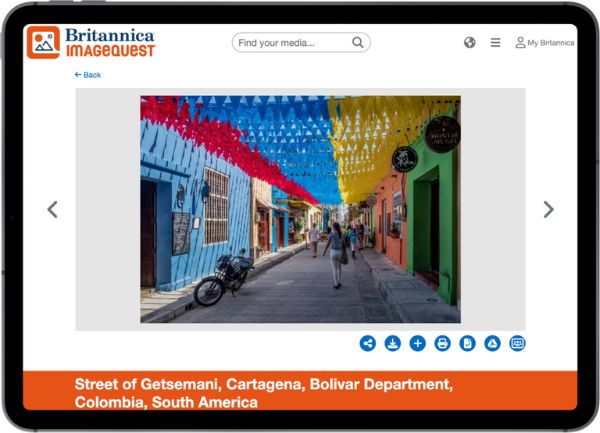
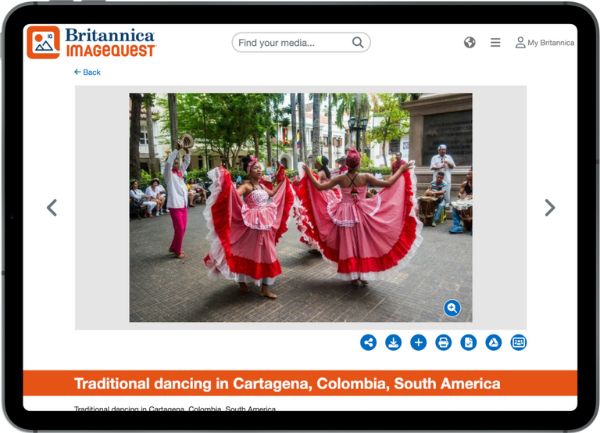
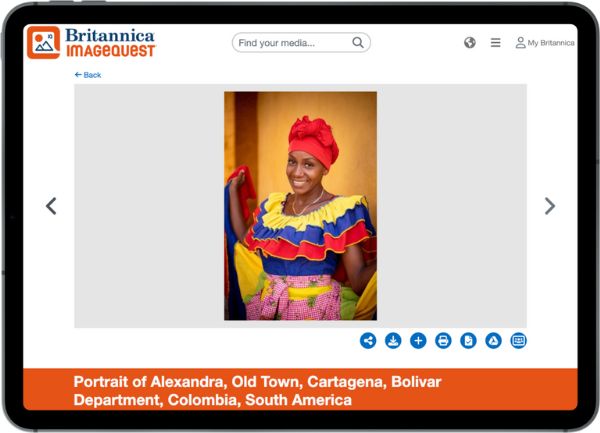
Students can bolster their findings using the extensive library of images and videos on ImageQuest. Have students curate albums of their favorite photos to stay organized as they research.
2. Thought Treasure Hunt
Once students have finished their preliminary research, it’s time for them to build the foundations for their reports. Have students review their favorite Britannica School articles and albums in ImageQuest to choose a country to highlight in their presentation.
We’ve highlighted a few of our favorite downloadable organizers from Teach Britannica to help students create connections and develop a robust research base, no matter what the subject matter.
Encourage students to compile the facts they’ve gathered using the Graphic Organizer: Main Idea and Detail template to foster critical thinking and analytical skills. Students can use this organizer to determine which details to highlight in their presentation.
The Graphic Organizer: Jigsaw Puzzle, is a versatile tool to collect information from a variety of formats, including images, articles, and videos. This organizer encourages students to find connections between different aspects of a culture, arranging fragments of information into a coherent whole.
When students are ready to create their presentation, they can use the Storyboard Graphic Organizer to build a plan to present with confidence.
3. Cultural Showcase
In this step, students become cultural ambassadors. Have students create a poster, slide show, or another type of presentation using the articles, photos, and videos that they compiled during their research. This presentation should not only relay facts but also illuminate their personal choices and reasons behind them.
After each presentation, have students discuss and ask each other questions to foster understanding and spark curiosity. To encourage discussion, have students make note of interesting facts during presentations to share later.
Did You Know?
5 Fast Facts
💡 Hispanic Heritage Month coincides with the celebrations of Independence Day in many Latin American countries.
💡 Latinos make up the largest minority group in the U.S., with over 50 million Hispanic Americans living in all 50 states.
💡 Many Hispanic Americans identify most with their family’s country or area of origin.
💡 More than half of all Hispanic Americans are of Mexican ancestry. Some descended from settlers in what was once part of Mexico, while others have migrated to the U.S.
💡 Hispanic Americans are all unique, with their own customs, traditions, religions, social characteristics, political beliefs, etc.
4. Share and Show
Finally, invite your students to bring or create something that represents an aspect of the culture they researched to share with the class.
Suggested ideas:
• A popular food or drink
• A type of dance or sport
• A famous person in this community (past or present)
• Notable music, movies, art, or literature
• Traditional clothing, accessory, or décor
Finally, have students arrange each unique item to “weave” a tapestry of Hispanic Heritage that showcases both diversity and unity.
This activity uses resources from Britannica School and Britannica ImageQuest. Not a subscriber? Contact us to learn more.

About the Author
Christopher Heintz
Customer Experience Director
Chris began his career in education as a high school social studies teacher in Chicago. Since then, he’s served in various roles in education management helping teachers navigate the complex world of assessments, data, curriculum, and instruction. Throughout it all, he’s been dedicated to one thing—providing teachers with the tools they need to create positive outcomes for the students in their care!

Recent Posts
Practical Jokes or Practical Adaptations: Can You Find These Critters?
Read More: Practical Jokes or Practical Adaptations: Can You Find These Critters?
Earth Day in Action
Read More: Earth Day in Action
How Deep Are Your Roots? An Earth Day Curiosity Quiz
Read More: How Deep Are Your Roots? An Earth Day Curiosity Quiz
Join Our Newsletter
From tips and tricks to engaging activities, find
attention-grabbing content for tomorrow’s lesson.