
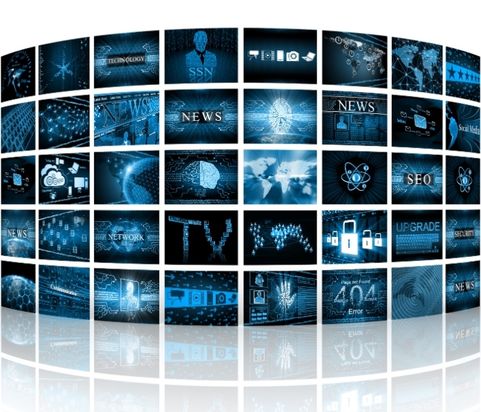

World Television Day is celebrated every year on November 21 to acknowledge the powerful role television has played in shaping communication and global awareness. Even in today’s digital era, television remains one of the most influential mediums for sharing information, spreading knowledge, and connecting communities across the globe.
For decades, television has educated, entertained, and inspired millions. From breaking news and insightful documentaries to fun learning programmes for children, TV has served as a window to the world—helping families explore cultures, ideas, and events beyond their own surroundings.
The United Nations proclaimed this day in 1996 to remind us that television is more than entertainment—it is a tool that can promote peace, encourage cultural understanding, and support social development.
Activity: My TV Show for Change
Objective: Encourage students to think creatively about how television and media can positively influence society.
Instructions:
- Divide students into small groups.
- Ask each group to create an idea for a TV show that spreads a positive message—such as kindness, environmental protection, inclusion, or healthy living.
- Students can design a poster, write a short script, or perform a 2-minute skit to present their show.
- Conclude with a class discussion: How can television encourage people to make the world a better place?
Why It Still Matters
In a world filled with constant streams of content, helping students understand media is more important than ever. Television continues to influence how we see the world—and when used thoughtfully, it can inform, inspire, and bring people together.
Moments like World Television Day remind us that learning doesn’t only happen in textbooks or classrooms. Sometimes, it begins with a story on a screen—and the questions it inspires afterward.
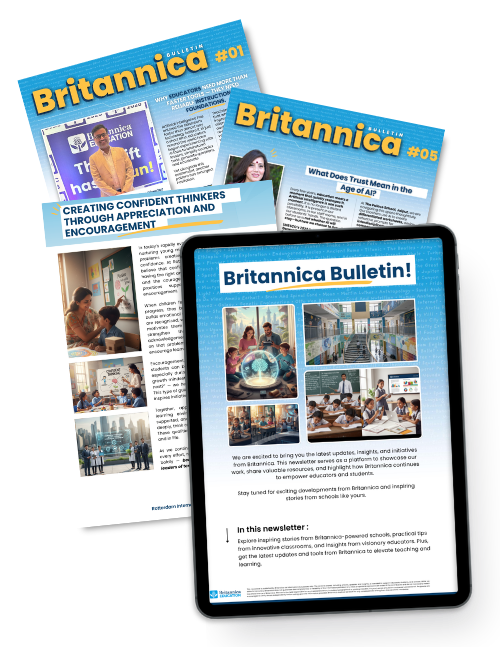
This story was featured in:
The Britannica Bulletin
Your source for monthly updates, resources, and stories empowering educators and students.

Recent Blog Posts


Academic Integrity and the Responsible Use of Artificial Intelligence in Schools
Read More: Academic Integrity and the Responsible Use of Artificial Intelligence in Schools
Rethinking Assessment in the Age of A.I.
Read More: Rethinking Assessment in the Age of A.I.
From Curiosity to Critical Thinking
Read More: From Curiosity to Critical Thinking
Responsible AI in Cambridge & IB Classrooms
Read More: Responsible AI in Cambridge & IB Classrooms
How IB and Cambridge Educators Can Maintain Pedagogical Depth
Read More: How IB and Cambridge Educators Can Maintain Pedagogical Depth
Summer Reimagined: How the Britannica Summer Spark Series is Transforming Learning
Read More: Summer Reimagined: How the Britannica Summer Spark Series is Transforming Learning
What Does Trust Mean in the Age of AI?
Read More: What Does Trust Mean in the Age of AI?
Creating Confident Thinkers Through Appreciation and Encouragement
Read More: Creating Confident Thinkers Through Appreciation and Encouragement