


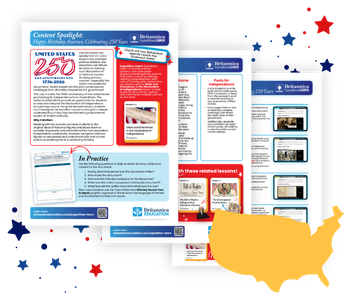


July 4 marks the 250th anniversary of the United States proclaiming its independence from Great Britain. The upcoming national celebrations provide an opportunity for students to read and interpret the Declaration of Independence as a primary source. Reading primary sources connects students to the original ideas of historical figures and allows them to consider arguments and motivations free from secondary interpretation.
Without thoughtful planning and facilitation, discussing current events can quickly turn U.S. civics lessons into polarizing political debates. Educators can help students navigate opposing opinions by framing such discussions in a historical context. Studying primary sources—especially the nation’s foundational documents—builds insight into the era’s contemporary challenges that ultimately shaped the U.S. government. Additionally, analyzing primary sources allows students to recognize historical figures as real people and understand past and current events as related parts of a continuing timeline.
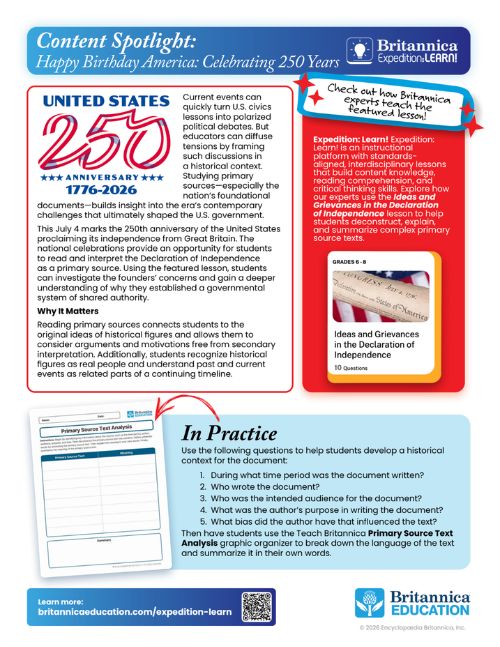
Check out how our experts use the Ideas and Grievances in the Declaration of Independence lesson.

Free Download

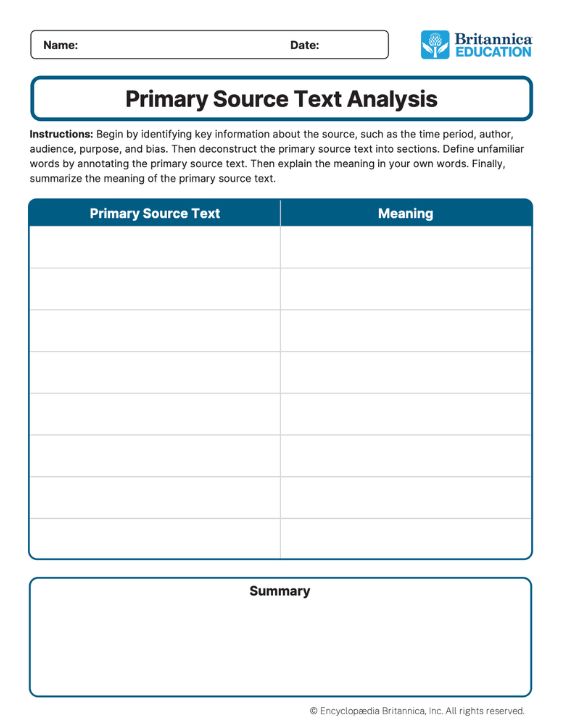
Analyze the Declaration of Independence
With the 250th anniversary of the United States approaching, now is a perfect time to help students develop best practices for analyzing primary sources, using the Declaration of Independence! Use the following questions to help students develop a historical context for the document:
- During what time period was the document written?
- Who wrote the document?
- Who was the intended audience for the document?
- What was the author’s purpose in writing the document?
- What bias did the author have that influenced the text?
Then have students use the Teach Britannica Primary Source Text Analysis graphic organizer to break down the language of the text and summarize it in their own words.
Available Now: Standards-Aligned Social Studies Lessons from Britannica
Content Spotlights give you a peek into Expedition: Learn! and its transformative social studies and literacy content. Expedition: Learn! is Britannica’s all-in-one instructional lesson platform. Grounded in decades of research and evidence-based practice, lessons can be used for whole-class instruction, small-group reteaching, or independent practice.
Want access to more quality social studies content? Click here to learn more about Expedition: Learn!
Expedition: Learn! in the Classroom
Get practical, classroom-ready guidance with tips and resources designed to build critical thinking skills.

Recent Blog Posts
6 Easy Ways to Gamify Britannica School
Read More: 6 Easy Ways to Gamify Britannica School
What Educators Really Think About AI: Insights from ISTE 2026
Read More: What Educators Really Think About AI: Insights from ISTE 2026
From 1776 to Today: The Big U.S. Timeline Quiz
Read More: From 1776 to Today: The Big U.S. Timeline Quiz
Using Britannica School and the World Cup to Score Big in the Classroom
Read More: Using Britannica School and the World Cup to Score Big in the Classroom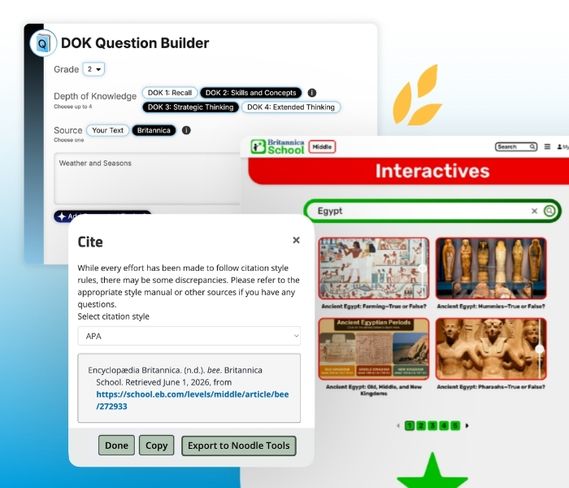
Teach Britannica, for Educators, with Love
Read More: Teach Britannica, for Educators, with Love
Summer Reading Ideas for Kids: Free Activities & Book List
Read More: Summer Reading Ideas for Kids: Free Activities & Book List
Practical Jokes or Practical Adaptations: Can You Find These Critters?
Read More: Practical Jokes or Practical Adaptations: Can You Find These Critters?

How Deep Are Your Roots? An Earth Day Curiosity Quiz
Read More: How Deep Are Your Roots? An Earth Day Curiosity Quiz
Join Our Newsletter
From tips and tricks to engaging activities, find
attention-grabbing content for tomorrow’s lesson.