



share


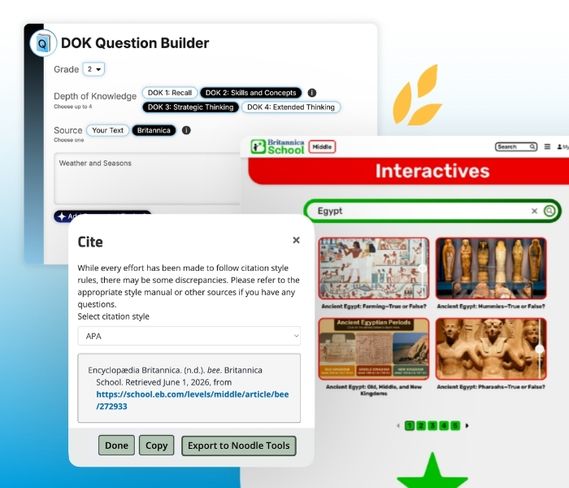
This summer, we’re rolling out new tools, smarter workflows, expanded multilingual experiences, and engaging learning enhancements designed to help educators save time, spark curiosity, and support every learner with trusted resources.
From powerful AI-supported teaching tools in Britannica Studio to additional early learning resources in Britannica School and Library to new multilingual content in Britannica Escolar, every update is grounded in the same mission: helping educators use trusted content to inspire curiosity and build critical thinking for all ages.
Take a peek at what’s coming to your favorite platforms!
Smarter AI Tools Built for Educators
Since launching Britannica Studio—our AI workspace for educators that’s grounded in Britannica’s trusted, fact-checked content—we’ve focused on helping teachers streamline lesson planning without sacrificing quality, rigor, or trust.
This summer, we’re introducing exciting new tools and enhancements inspired directly by educator feedback.
Assess It:
More Ways to Measure Understanding
Assessments shouldn’t feel one-size-fits-all.
This spring, we expanded the question formats available through the Assess It tool to help educators create more flexible, differentiated formative assessments in minutes.
Teachers can now generate:
- True/false questions
- Matching activities
- Fill-in-the-blank prompts
- Written response questions
- Multiple-choice assessments
Always grounded in Britannica’s trusted, human-vetted content, all assessment options provide answer keys and source links. Improved editing capabilities allow educators to refine assessments to meet their specific lesson objectives and classroom needs.
The result? Less time building formative assessments from scratch, more time focusing on student learning.
DOK Question Builder:
Go Beyond Recall
Critical thinking starts with better questions.
Our new DOK Question Builder helps educators create strategic questions aligned to all four Depth of Knowledge (DOK) levels—from recall to extended thinking.
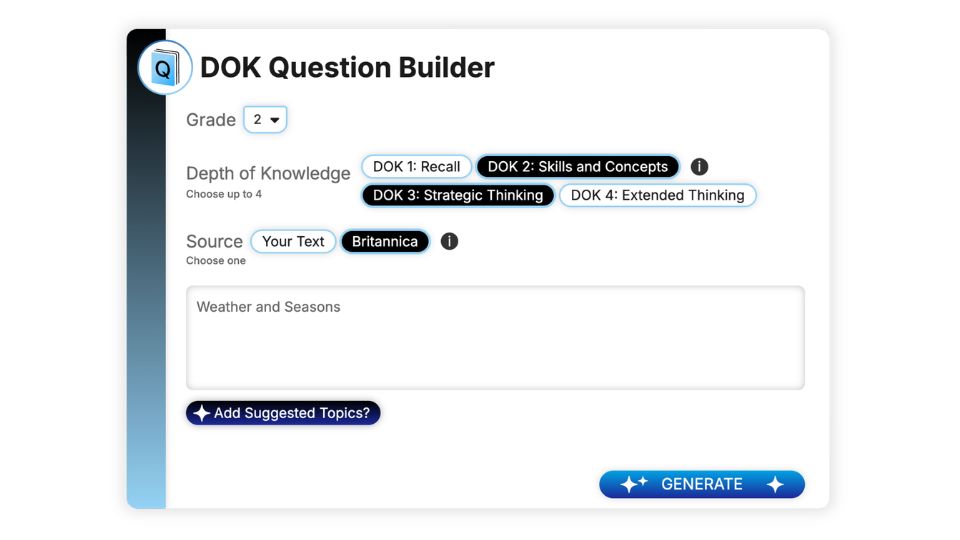
Using either teacher-provided content or Studio-generated materials, educators can instantly generate questions that support rigor, deeper inquiry, and meaningful classroom discussion.
Each set includes example answers, helping teachers save time while maintaining instructional quality.
Present It:
Turn Trusted Knowledge into Dynamic Teaching Moments
One of our most anticipated tools is almost here.
Late this summer, educators will be able to quickly generate media-rich presentations—complete with images, videos, speaker notes, and customizable templates—built from Britannica’s trusted content.
Here’s how it works:
1. Select a grade level.
2. Choose the number of slides.
3. Enter a prompt.
4. Select a presentation template.
Studio then builds a ready-to-deliver presentation using Britannica’s verified text, visuals, and multimedia resources. Educators can make edits themselves, ask Studio to revise content, generate translated versions, and export directly to Google Slides or PowerPoint.
Unlike general AI tools that hallucinate “facts” and generate unreliable visuals, Present It supports lessons by curating relevant, educator-ready resources for you.
That means teachers can move faster without sacrificing accuracy or trust.
More Powerful Ways to Work
This summer also brings several additional highly requested enhancements to Britannica Studio:
Postsecondary Support
Britannica Studio will extend into postsecondary education with a new “Grade 13+” option powered by Britannica Academic, giving faculty access to university-level content generation.
Easier Source Sharing
Educators soon will be able to export source links more efficiently, supporting citation and transparency.
Google Classroom Integration
Sharing Studio outputs directly to Google Classroom is coming soon, making classroom workflows even smoother.
We’re incredibly excited to see how educators around the world use these new Studio tools to save time, support inquiry, and create engaging learning experiences.

More Ways for Students to Explore
Curiosity grows when students can explore information, not just read it. This summer, Britannica School and Britannica Library are introducing new integrations and interactive experiences that make discovery easier, more engaging, and more meaningful for learners of all ages.
NoodleTools Integration
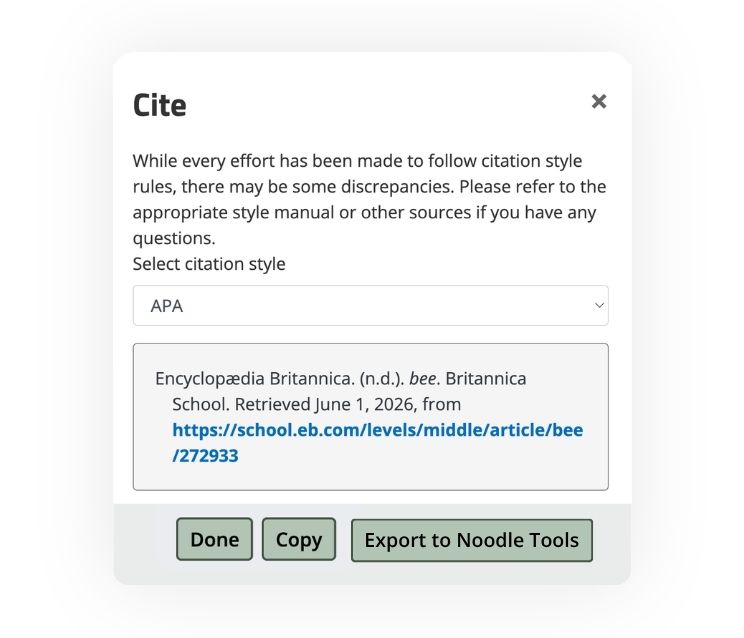
Educators have asked—and we’ve responded! We are so excited to announce our integration with NoodleTools. This fall, students will be able to export their citations directly to their NoodleTools accounts, streamlining their ability to credit their sources.
Searchable Interactive Media
Students and educators soon will be able to search interactive media directly within Britannica School’s Elementary and Middle levels and Britannica Library’s Children and Young Adult levels.
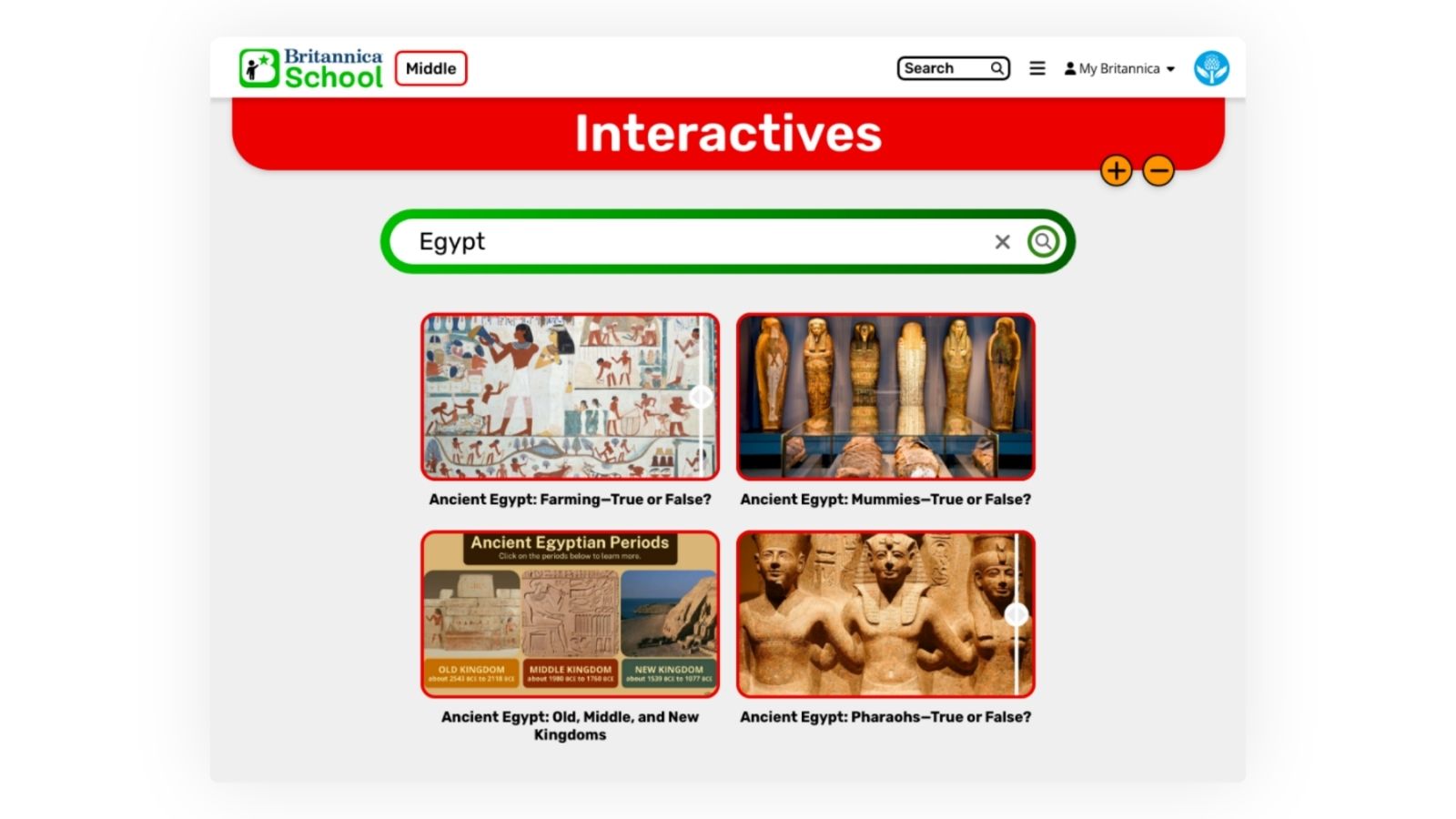
Interactive experiences are already student favorites because they transform passive learning into active exploration. Whether students are exploring Albert Einstein’s life, comparing dog breeds, or investigating scientific concepts, these interactives help deepen understanding through discovery and engagement.
Soon, instead of scrolling through hundreds of options, learners can quickly find the interactive content most relevant to their interests and classroom needs.
Expanding Early Learning Experiences
We have even more exciting updates in store for our youngest learners.
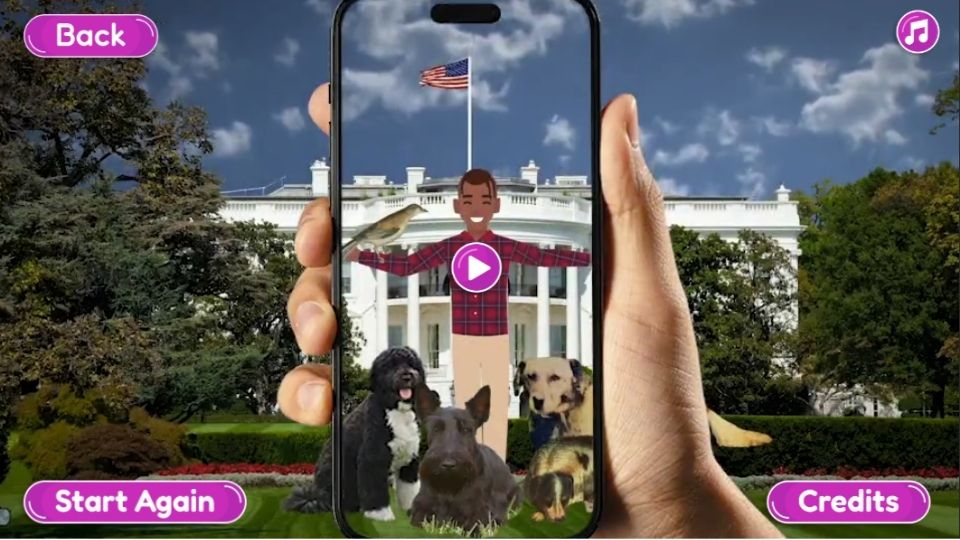
This summer, Britannica School: Early Elementary and Britannica Library: Young Children are introducing all-new interactive learning experiences designed specifically for PreK–2 students.
These playful, engaging interactives help gamify learning while encouraging active participation. Filled with charming animations and hands-on exploration opportunities, they are designed to help young learners build curiosity, confidence, and foundational literacy skills.
Teach Britannica: More Support for Early Learners
The learning doesn’t stop on the screen. Teach Britannica is expanding its support for PreK–2 educators with instructional strategies designed specifically for early learners.
Teachers will gain:
- Step-by-step classroom implementation ideas
- Differentiated printable worksheets for offline engagement
- Literacy-focused instructional strategy supports
These new resources help educators connect digital exploration with meaningful offline learning experiences that reinforce understanding and keep curiosity growing.
Explore our content catalog to see the PreK-2 topics offered through Britannica School and Teach Britannica.
Expanding Curiosity in Spanish
This summer, Britannica Escolar is growing by supporting learners at the very beginning of their educational journey and all the way through higher education.
Infantil: Early Learning in Native Spanish
We’re excited to introduce Infantil, a brand-new level in Britannica Escolar created specifically for young learners beginning their journey in early literacy, discovery, and language development.
Presented entirely in native, age-appropriate Spanish, Infantil features:
- Engaging articles
- Vibrant visuals
- Interactive learning experiences
- Read-aloud support
- Standards-aligned, culturally relevant content
The new level helps students strengthen literacy skills while exploring the world around them in Spanish, helping them build confidence and comprehension.
Académica: Expanding into Higher Education
Britannica Escolar is also expanding into higher education with the upcoming launch of Académica.
Designed for university students, faculty, and advanced learners, Académica will provide rigorously researched academic content in Spanish across disciplines including history, science, literature, and social sciences.
The platform will include:
- Scholarly articles
- Primary sources
- Citation tools
- Multimedia resources
By offering high-quality academic content entirely in Spanish, Académica helps learners deepen subject mastery while supporting critical thinking and independent research.
Learn more about all levels of Britannica Escolar; Infantil for early learners is available now and Académica is coming soon!
Helping Curiosity Lead Learning
As educators prepare for a new school year, we’re committed to building trustworthy tools and experiences that make learning more engaging and accessible for every student. And more innovation is in the works.
Whether it’s helping teachers save time, supporting multilingual learners, strengthening critical thinking, or creating safer ways to use AI in education, every enhancement is designed with one goal in mind: to help curiosity lead learning.
Subscribe to our monthly newsletter for product updates, timely resources, fun facts, and freebies!

Recent Blog Posts

Beyond the Answer: A More Thoughtful Approach to AI-Powered Research
Read More: Beyond the Answer: A More Thoughtful Approach to AI-Powered Research
AI Can Find an Answer, BUT Can Students Verify It?
Read More: AI Can Find an Answer, BUT Can Students Verify It?
Read, Play, Connect: Bringing Early Literacy to Life with Britannica
Read More: Read, Play, Connect: Bringing Early Literacy to Life with Britannica
6 Easy Ways to Gamify Britannica School
Read More: 6 Easy Ways to Gamify Britannica School
What Educators Really Think About AI: Insights from ISTE 2026
Read More: What Educators Really Think About AI: Insights from ISTE 2026
From 1776 to Today: The Big U.S. Timeline Quiz
Read More: From 1776 to Today: The Big U.S. Timeline Quiz
Using Britannica School and the World Cup to Score Big in the Classroom
Read More: Using Britannica School and the World Cup to Score Big in the Classroom
Teach Britannica, for Educators, with Love
Read More: Teach Britannica, for Educators, with Love
Summer Reading Ideas for Kids: Free Activities & Book List
Read More: Summer Reading Ideas for Kids: Free Activities & Book List
Join Our Newsletter
From tips and tricks to engaging activities, find
attention-grabbing content for tomorrow’s lesson.