






Take an educational trip to the great outdoors from, well, indoors. This winter, virtually explore famous attractions worldwide courtesy of Britannica School and ImageQuest. Using a combination of informational text, engaging video, and visuals, your students will learn about each of the New Seven Wonders of the World from various perspectives. Even better, you don’t need permission slips!
What are the Seven Natural Wonders of the World?
Of the original Seven Wonders of the World, only one—the Pyramids of Giza—still exists. The Hanging Gardens of Babylon, the Lighthouse of Alexandria, the Temple of Artemis, the Colossus of Rhodes, the Statue of Zeus at Olympia, and the Mausoleum at Halicarnassus have all faded to dust and memory. These, instead, are seven new wonders for our time.
1. Great Wall of China
Rights Managed / For Education Use Only
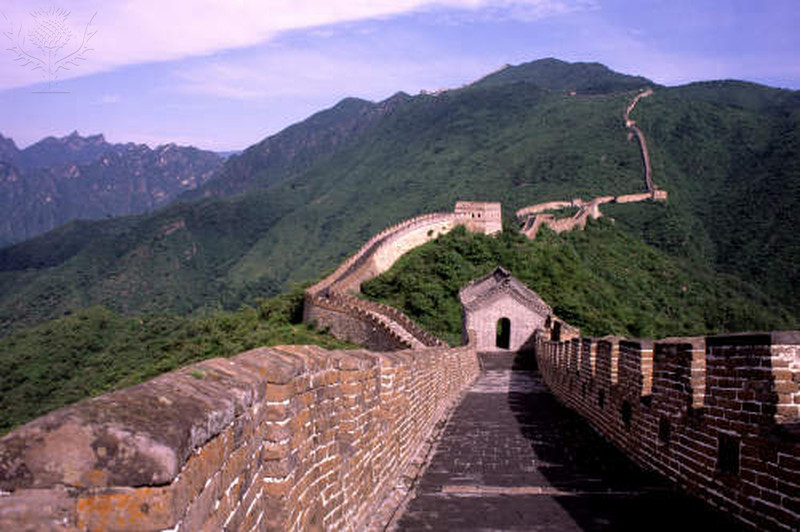
Great might be an understatement. One of the most significant engineering and building projects ever carried out, the Great Wall of China extends for some 5,500 miles (8,850 kilometers), often tracing the crestlines of hills and mountains as it snakes across the countryside. Work began in the 7th century BCE and continued for two millennia. Although called a “wall,” the structure features not one wall but many different walls built over time in northern China and southern Mongolia, some running parallel. It extends from Liaoning Province in the east to Gansu Province in the northwest. Roughly 70 percent of the total length consists of constructed wall, with the rest comprised of natural barriers, ditches, and moats. Originally a defensive system, it is today a major tourist attraction and a national symbol of China.
2. Chichén Itzá
Rights Managed / For Education Use Only
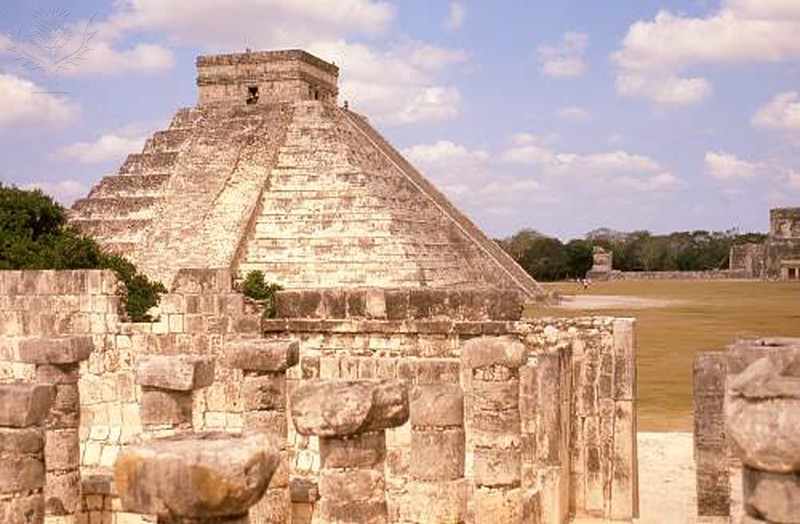
Chichén Itzá is a Mayan city on the Yucatán Peninsula in Mexico, which flourished in the 9th and 10th centuries. The Mayan tribe Itzá—strongly influenced by the Toltecs—built several important monuments and temples. The stepped pyramid known as El Castillo (The Castle) is among the most recognizable, which rises 79 feet (24 meters) above the Main Plaza. Each of its four sides has 91 steps, including the step on the top platform, totaling 365—the number of days in the solar calendar. At the spring and autumn equinoxes, the setting sun casts shadows on the pyramid that look like descending serpents. Today it is an archaeological area and a UNESCO World Heritage site.
3. Petra
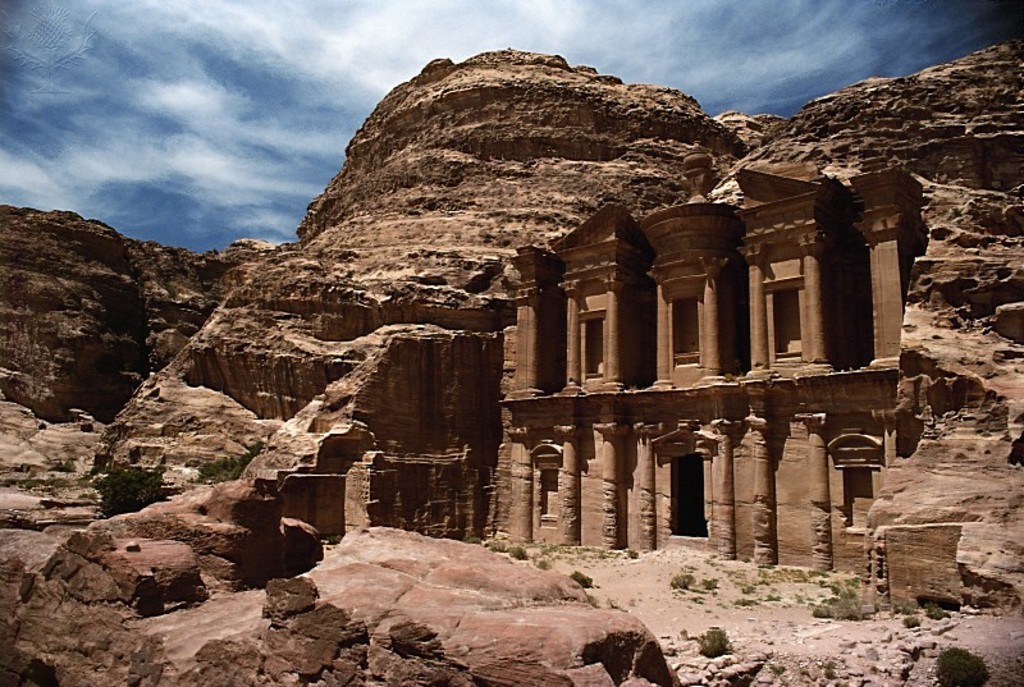
The ancient city of Petra, in what is now southwestern Jordan, is located in a remote valley. Nestled among sandstone mountains and cliffs, Petra is believed to be where Moses struck a rock, and water gushed forth. Later the Nabataeans, an Arab tribe, made it their capital, and during this time, it flourished, becoming an important trade center. Noted carvers, the Nabataeans chiseled dwellings, temples, and tombs into the sandstone, which changed color with the shifting sun. In addition, they constructed a water system that allowed for lush gardens and farming. At its height, Petra reportedly had a population of 30,000. However, the city began to decline as trade routes shifted. People gradually abandoned Petra after a major earthquake in 363 CE, followed by another tremor that hit in 551. Although rediscovered in 1912, archaeologists largely ignored it until the late 20th century.
4. Machu Picchu
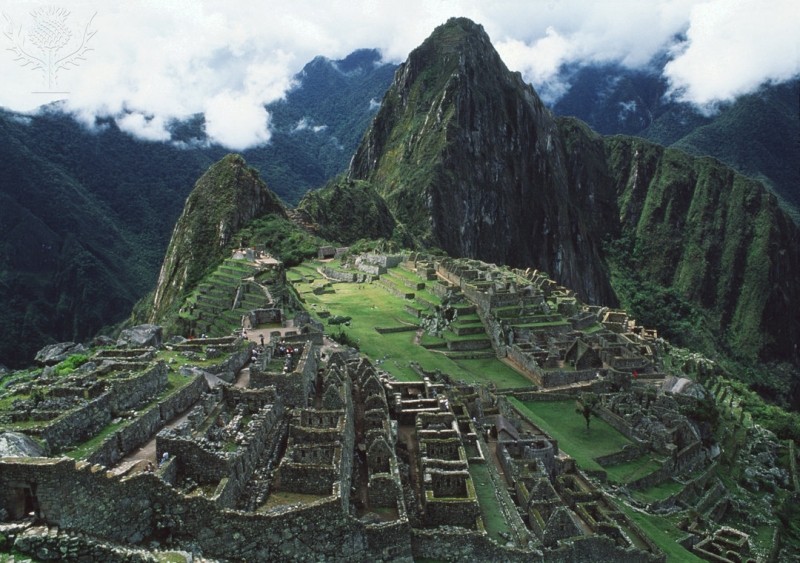
Rights Managed / For Education Use Only
The Andes Mountains of Peru feature the ruins of many cities built by the Inca people. The most famous of these is Machu Picchu, located in south-central Peru about 50 miles (80 kilometers) northwest of the city of Cuzco, the capital of the Inca empire. Perched in a narrow saddle between two sharp peaks, Machu Picchu—an “old peak”—stands at an elevation of 7,710 feet (2,350 meters). Designated as a UNESCO World Heritage site in 1983, the site includes plazas, temples, houses, and a cemetery connected by walkways and thousands of stone steps. It remains one of the few significant pre-Columbian ruins found nearly intact. Among the most notable structures is the semicircular Temple of the Sun. Once a year, sunlight shines through a window onto a ceremonial stone inside the temple on the June solstice.
5. Christ the Redeemer
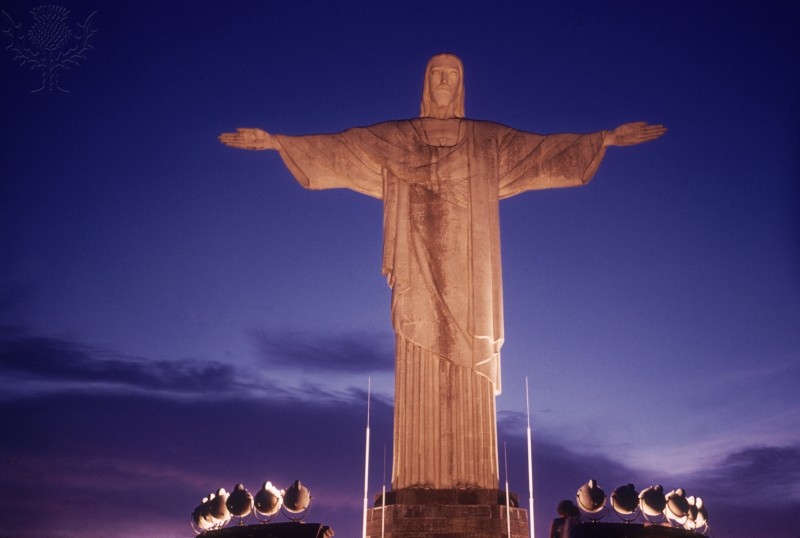
At the top of Mount Corcovado in southeastern Brazil, overlooking Rio de Janeiro stands a colossal statue of Jesus Christ called Christ the Redeemer. It is the largest Art Deco-style sculpture in the world and is one of Rio de Janeiro’s most recognizable landmarks. Made of reinforced concrete and clad in a mosaic of thousands of triangular soapstone tiles, the monument stands 98 feet (30 meters) tall, and its horizontally outstretched arms span 92 feet (28 meters). The square stone pedestal base upon which the statue rests is about 26 feet (8 meters) high and situated on a deck atop the mountain’s summit.
6. Colosseum
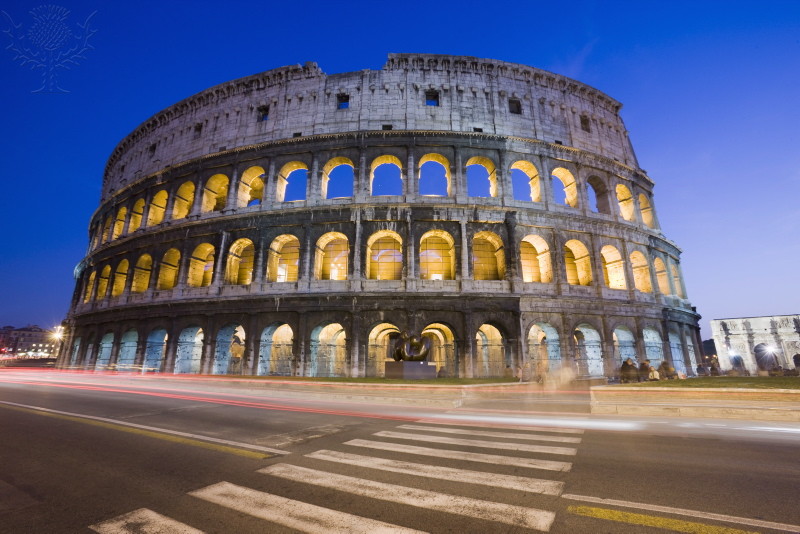
The Colosseum in Rome was built in the first century by the order of Emperor Vespasian. A feat of engineering, the amphitheater measures 620 by 513 feet (189 by 156 meters) and features a complex system of vaults. It was capable of holding 50,000 spectators, who watched a variety of events. Perhaps most notable were gladiator fights, though men battling animals was also common. In addition, water was sometimes pumped into the Colosseum for mock naval engagements. However, the belief that Christians were martyred there—namely, by being thrown to lions—is debated. According to some estimates, about 500,000 people died in the Colosseum. Additionally, so many animals were captured and then killed there that certain species reportedly became extinct.
7. Taj Mahal
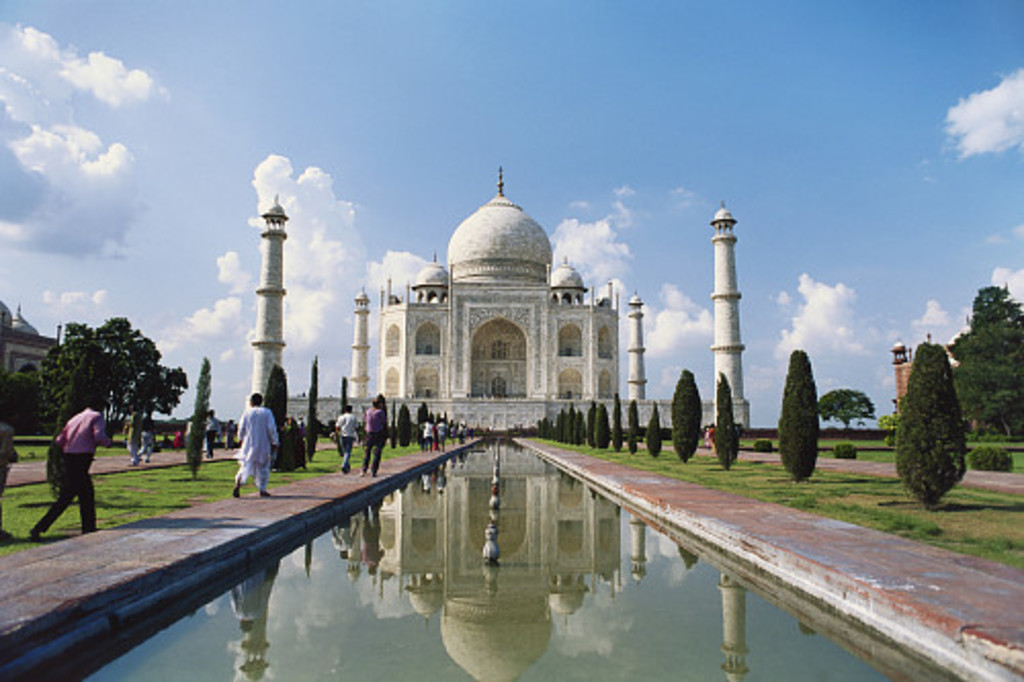
Rights Managed
The Taj Mahal is a monument in Agra, India. Before it became the name of one of the world’s most beautiful buildings, the Taj Mahal was a woman’s name. She was Arjumand Banu Begum (begum is a title for a Muslim woman of high social rank), the favorite wife of Shah Jahan, the Muslim ruler of India’s Mughal Empire from 1628 to 1658. He affectionately called her Mumtaz Mahal, meaning “ornament of the palace.” The name Taj Mahal came from this term of endearment and later became the burial place. UNESCO named the Taj Mahal a World Heritage site in 1983. It is the finest example of Mughal architecture, blending Indian, Persian, and Islamic styles. Millions of tourists visit the site each year.
The world is full of incredible wonders—both man-made and natural—that normally wouldn’t be visited on a class trip. But with virtual field trips, such faraway places suddenly seem much closer. This blog features resources from Britannica School and Britannica ImageQuest. Don’t have a subscription? Learn more about Britannica School or Britannica ImageQuest.

Recent Blog Posts

Read, Play, Connect: Bringing Early Literacy to Life with Britannica
Read More: Read, Play, Connect: Bringing Early Literacy to Life with Britannica
6 Easy Ways to Gamify Britannica School
Read More: 6 Easy Ways to Gamify Britannica School
What Educators Really Think About AI: Insights from ISTE 2026
Read More: What Educators Really Think About AI: Insights from ISTE 2026
From 1776 to Today: The Big U.S. Timeline Quiz
Read More: From 1776 to Today: The Big U.S. Timeline Quiz
Using Britannica School and the World Cup to Score Big in the Classroom
Read More: Using Britannica School and the World Cup to Score Big in the Classroom

Teach Britannica, for Educators, with Love
Read More: Teach Britannica, for Educators, with Love

Summer Reading Ideas for Kids: Free Activities & Book List
Read More: Summer Reading Ideas for Kids: Free Activities & Book List
Practical Jokes or Practical Adaptations: Can You Find These Critters?
Read More: Practical Jokes or Practical Adaptations: Can You Find These Critters?
Join Our Newsletter
From tips and tricks to engaging activities, find
attention-grabbing content for tomorrow’s lesson.