


share



Winning an Award Wasn’t the Biggest Takeaway from ISTE.
The conversations we had with educators were even more important.
Winning a Tech & Learning Best of Show Award at ISTELive 2026 was an incredible honor for everyone at Britannica Education. It’s exciting any time your work is recognized—especially by one of education’s most respected technology publications during one of the industry’s largest conferences.
But by the time the conference ended, the award wasn’t what we were talking about most. What stayed with us were the conversations.
This year, instead of simply demonstrating Britannica Studio, we invited educators to answer one simple question:
“What’s your biggest challenge with AI?”
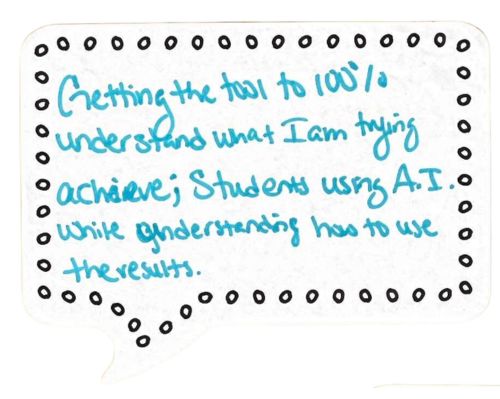
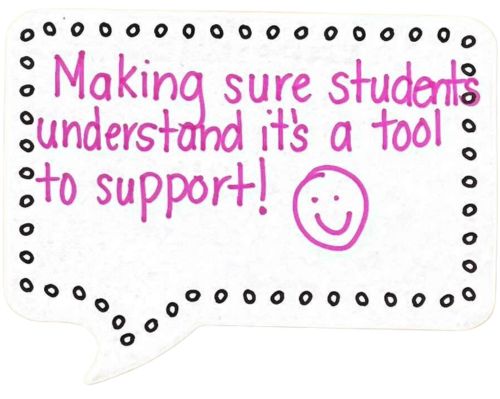
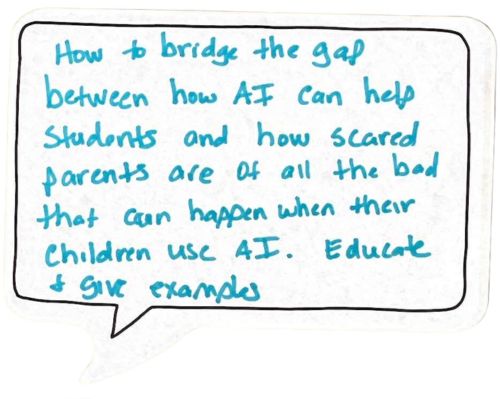
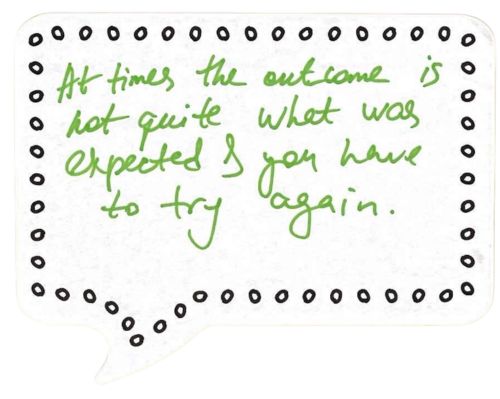
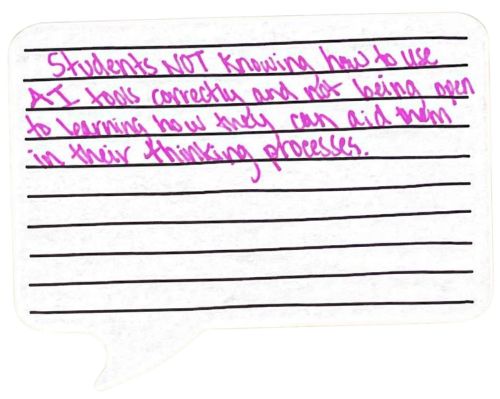
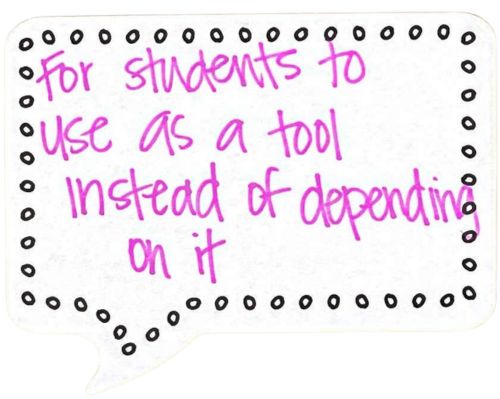
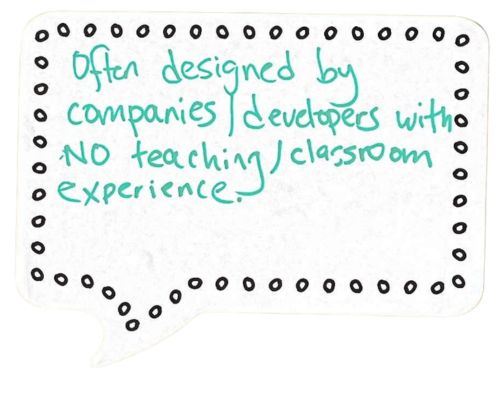
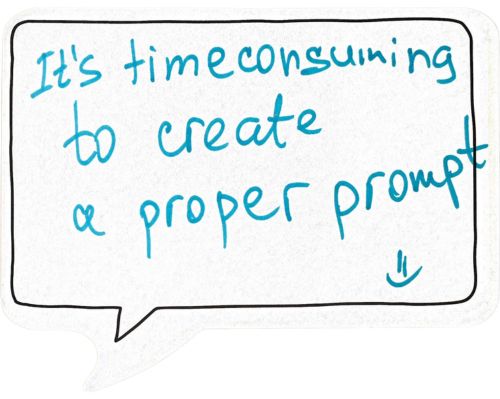
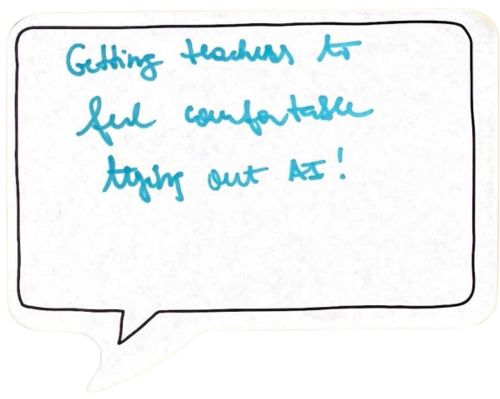
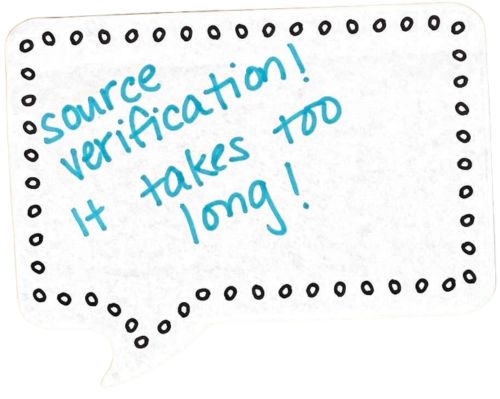
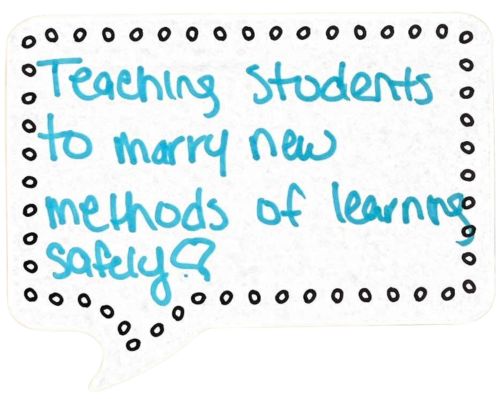
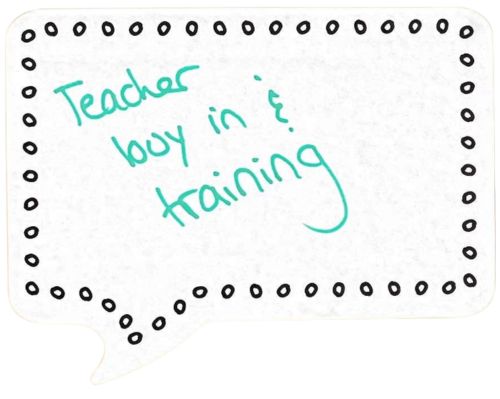
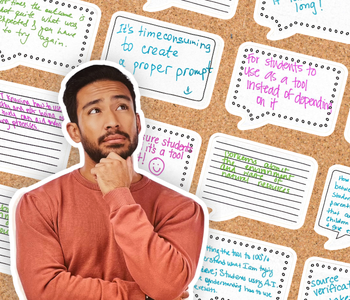
By the end of the conference, our wall was filled with handwritten responses. Some educators answered with source verification, safety, and accuracy, while others wrote about teacher buy-in, training, and student misuse.
Every response was different. But together, they told the same story.
The Conversation Has Changed
A year ago, much of the conversation around AI focused on possibility.
- How quickly can it write?
- What can it generate?
- How many hours can it save?
This year, the conversation felt different. At ISTE, educators weren’t asking what AI could do. They were asking whether they could trust it.
- Where does the information come from?
- How much time will I spend fact-checking?
- How do I know what students are reading is accurate?
- How do I help teachers use AI responsibly?
Those aren’t technology questions—they’re teaching questions. They signal an important shift from excitement about AI to expectations for AI.
Why the Award Matters
Those conversations made receiving Tech & Learning’s Best of Show Award especially meaningful. To us, the recognition felt like validation that education is beginning to reward something we’ve believed from the beginning:
AI should strengthen teaching, not complicate it. Teachers shouldn’t have to choose between efficiency and accuracy, and they shouldn’t have to sacrifice transparency for speed. And they certainly shouldn’t become full-time fact-checkers just to save time.
Britannica Studio was built around those ideas.
Grounded in Britannica’s verified, standards-aligned content, Studio helps educators create differentiated, classroom-ready instructional materials while providing transparent source citations—all in a workflow designed around the way teachers actually plan.
In other words, our AI workspace was built to answer many of the very concerns educators shared with us throughout the week.
Four Questions Every School Should Be Asking About AI
One of the biggest takeaways from ISTE is that schools need a better framework for evaluating AI. Not based on the number of features, but based on whether the tool actually supports good teaching.
We created our AI Trust Checklist for Classrooms to meet this need for you. Before a school adopts any AI platform, we encourage educators to ask four simple questions:
These seem like simple questions, but after spending a week listening to educators from around the world, we believe they’re some of the most important questions schools can ask.
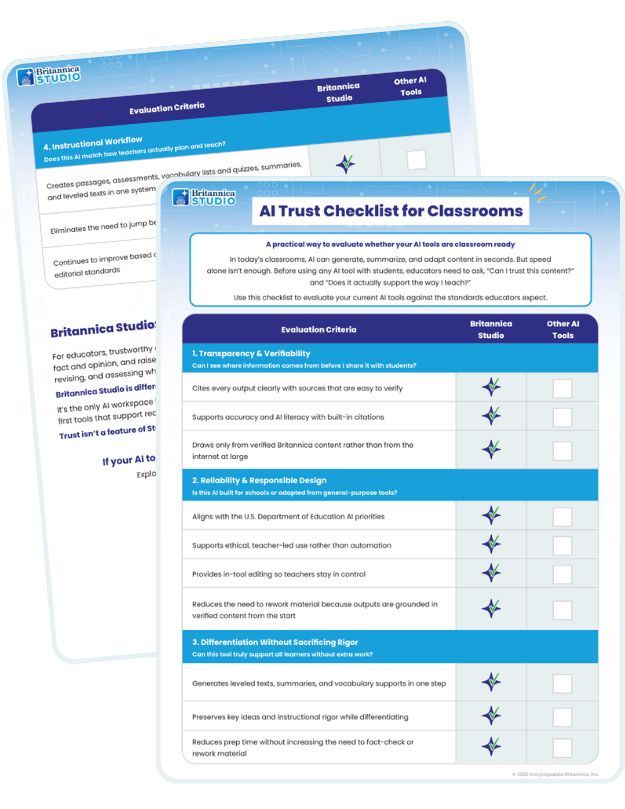
Download the AI Trust Checklist
Whether you’re evaluating Britannica Studio or another AI solution, we hope this checklist provides a practical framework for thinking about responsible AI in education. If ISTE reminded us of anything this year, it’s this:
The future of AI in education won’t be defined by who has the fastest technology. It will be defined by who earns educators’ trust.



Recent Blog Posts

Beyond the Answer: A More Thoughtful Approach to AI-Powered Research
Read More: Beyond the Answer: A More Thoughtful Approach to AI-Powered Research
AI Can Find an Answer, BUT Can Students Verify It?
Read More: AI Can Find an Answer, BUT Can Students Verify It?
Read, Play, Connect: Bringing Early Literacy to Life with Britannica
Read More: Read, Play, Connect: Bringing Early Literacy to Life with Britannica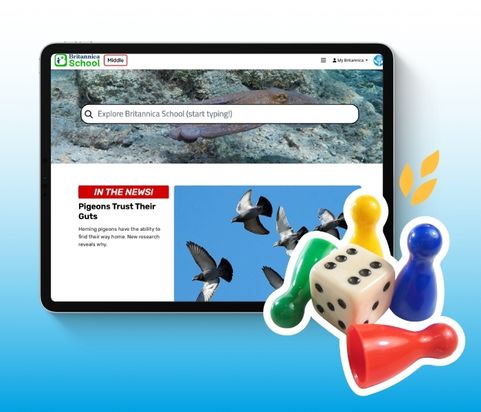
6 Easy Ways to Gamify Britannica School
Read More: 6 Easy Ways to Gamify Britannica School
From 1776 to Today: The Big U.S. Timeline Quiz
Read More: From 1776 to Today: The Big U.S. Timeline Quiz
Using Britannica School and the World Cup to Score Big in the Classroom
Read More: Using Britannica School and the World Cup to Score Big in the Classroom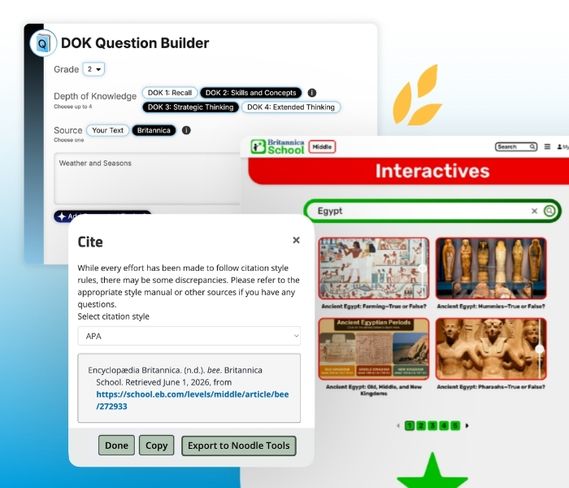
Teach Britannica, for Educators, with Love
Read More: Teach Britannica, for Educators, with Love
Summer Reading Ideas for Kids: Free Activities & Book List
Read More: Summer Reading Ideas for Kids: Free Activities & Book List
Join Our Newsletter
From tips and tricks to engaging activities, find
attention-grabbing content for tomorrow’s lesson.