


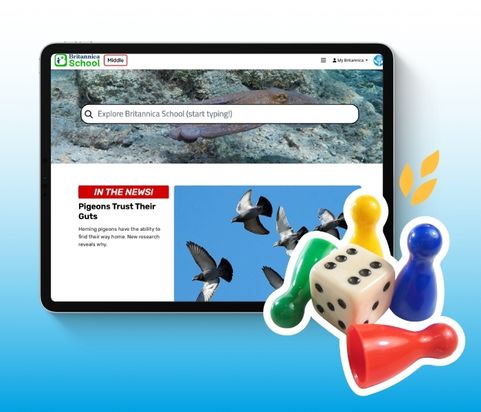
Level Up Student Research:
6 Easy Ways to Gamify Britannica School

share


Let’s be honest—research isn’t always students’ favorite part of the school day.
For many learners, “research” means endless scrolling, skimming walls of text, and hoping the first website they click has the answer. Even the most curious students can lose momentum before they discover something truly interesting.
But what if research felt less like homework… and more like a game?
Gamification isn’t about ditching standards or replacing rigorous learning with flashy rewards. It’s about adding just enough challenge, curiosity, and collaboration to make students want to keep exploring. And the best part is you don’t need to redesign your curriculum or spend hours creating elaborate activities.
With Britannica School’s built-in tools, you already have everything you need to turn research into an adventure. By tweaking how students interact with the platform, you can boost engagement from day one.
Why Gamify Research?
Research is about much more than finding facts. Students are learning how to ask questions, evaluate information, compare sources, and think critically. Adding game elements helps students:
Let’s get started!
1. Research Bingo
Best for:
Exploring Britannica School’s features
A simple Bingo card transforms students into information explorers. Instead of hunting for random facts, students complete squares by discovering different types of content throughout Britannica School.
Sample Bingo Squares
- Read about a mammal.
- Locate an infographic.
- Listen to an article using the Read Aloud tool.
- Find a map.
- Locate a primary source.
- Compare two reading levels.
- Discover an article with an embedded video.
- Cite a source.
Students can complete the tasks in any order to earn five in a row—or challenge themselves to fill the entire board. Don’t forget to include the Free Space!
Why it works:
Students naturally discover tools they’ll continue using long after the game ends.
2. Fact-Finding Missions
Best for:
Subject-specific quick checks
Turn students into expert investigators with short, focused missions. Instead of assigning broad research topics, give students a specific challenge that requires gathering evidence from multiple Britannica School sources.
Example: Weather Unit
Mission:
Hurricane Headquarters
Find:
- Three facts about hurricanes
- One safety tip
- One image explaining hurricane formation
When teams finish, they become the classroom’s “hurricane experts” and teach the rest of the class.
Why it works:
The clear objective keeps students focused while encouraging deeper exploration.
3. Team Research Challenges
Best for:
Collaboration and citation practice
A little friendly competition goes a long way. Divide students into teams and ask everyone the same research question—but award points for depth and proper resource usage, not just speed.
Example: Solar System Search
Question:
Which planet has the shortest day?
Bonus Point Rules:
- Correct answer
- One additional interesting fact
- Evidence from more than one Britannica resource
- Proper citation
Students quickly discover that careful researchers often outperform fast researchers.
Why it works:
This challenge reinforces accuracy, source evaluation, and teamwork all at once.
4. Mystery Solvers
Best for:
Critical thinking and deduction
Who doesn’t love solving a mystery? Instead of revealing the topic, give students clues that require careful investigation.
Example: Who Am I?
Clue:
I was born in Italy, sailed for Spain, and made four voyages across the Atlantic. Who am I?
Answer:
Christopher Columbus
Students search Britannica School, collect evidence, and defend their answers before revealing the mystery. Try this format with historical figures or inventors, animals and their habitats, landforms, or famous works of art.
Why it works:
Students practice making evidence-based conclusions rather than simply searching for answers.
5. Digital Escape Rooms
Best for:
Multi-step research and problem-solving
Escape rooms can be for more than just team-building. Create a series of sequential research challenges where each correct answer unlocks the next clue; students must answer specific questions using Britannica School to crack the code.
Example: Rainforest Quest
Stage 1: Identify the largest rainforest in the world.
Stage 2: Identify its continent.
Stage 3: Name one native animal species.
You can create these with Google Forms, slides, or printed clue cards.
Why it works:
Students stay motivated because every answer leads to another discovery.
6. Research Leaderboards
Best for:
Celebrating great research habits
Instead of rewarding whoever finishes a challenge first, celebrate the behaviors that make great researchers. Track positive behaviors on a visible or digital board throughout a research unit. Award points for things like:
- Asking thoughtful follow-up questions
- Cross-referencing evidence across multiple Britannica sources
- Helping a classmate navigate search tools
- Exploring interactive elements or media
- Properly citing sources
The goal isn’t winning—it’s building lasting research habits.
Why it works:
Students begin valuing curiosity and careful investigation over speed.
Keep It Simple
You don’t need to gamify every lesson. Try starting with just one activity during your next research assignment. A few tips for success:
- Start Small: Choose one game type (like Fact-Finding Missions or Research Bingo).
- Emphasize Collaboration: Pair reluctant researchers with tech-savvy partners.
- Focus on the Process: Remind students that accuracy, reflection, and proper citation beat speed every time.
Even small changes can make research feel fresh again.
Ready to Press Start?
Gamifying research doesn’t mean rewriting your lesson plans. It simply changes how students interact with information. By adding clues, challenges, teamwork, and a little friendly competition, you’ll often see students spend more time exploring, asking better questions, and discovering resources they may never have opened otherwise.
With Britannica School already providing trusted content, multimedia resources, reading supports, and interactive features, you’re only a few game mechanics away from turning everyday research into an engaging learning experience.
Which of these six strategies will you try first in your classroom or library? We’d love to hear how you bring research to life! Share your ideas with us on social media.
share
Bonus Resource
Download our free Britannica School Scavenger Hunts to kick-start students’ research journey!
-
Britannica School Scavenger Hunt Grades 3-5
-
Britannica School Scavenger Hunt Grades 6-8+

Recent Blog Posts

Read, Play, Connect: Bringing Early Literacy to Life with Britannica
Read More: Read, Play, Connect: Bringing Early Literacy to Life with Britannica
What Educators Really Think About AI: Insights from ISTE 2026
Read More: What Educators Really Think About AI: Insights from ISTE 2026
From 1776 to Today: The Big U.S. Timeline Quiz
Read More: From 1776 to Today: The Big U.S. Timeline Quiz
Using Britannica School and the World Cup to Score Big in the Classroom
Read More: Using Britannica School and the World Cup to Score Big in the Classroom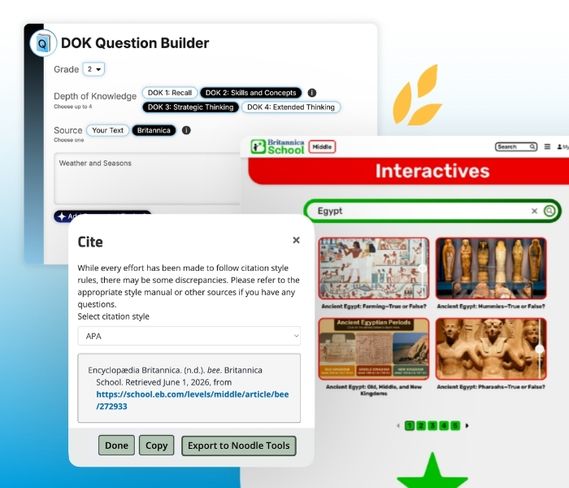

Teach Britannica, for Educators, with Love
Read More: Teach Britannica, for Educators, with Love
Summer Reading Ideas for Kids: Free Activities & Book List
Read More: Summer Reading Ideas for Kids: Free Activities & Book List
Practical Jokes or Practical Adaptations: Can You Find These Critters?
Read More: Practical Jokes or Practical Adaptations: Can You Find These Critters?
Join Our Newsletter
From tips and tricks to engaging activities, find
attention-grabbing content for tomorrow’s lesson.