




share


Why trusted sources, strong research skills, and responsible AI matter more than ever in higher education
AI has quickly become part of everyday academic life. Students are using it to explore unfamiliar topics, summarize information, brainstorm ideas, locate sources, and help with assignments.
According to the Higher Education Policy Institute’s 2026 Student Generative AI Survey, 95% of UK undergraduates use AI, and 94% rely on generative AI to assist with assessed work. While AI tools can make finding information faster, speed doesn’t guarantee accuracy, and an answer that sounds convincing isn’t necessarily one a student should trust.
This leaves higher education with a critical question: Do students actually know how to evaluate what AI gives them?
When a Citation Looks Right, But Isn’t
Generative AI can produce references that look completely legitimate—complete with authors, journal titles, dates, and even DOIs. The problem? Sometimes the source doesn’t exist at all.
A study published in Scientific Reports examined 636 citations generated by GPT models:
of GPT-3.5 citations were completely fabricated.
of GPT-4 citations were fictitious.
of real GPT-3.5 and GPT-4 citations, respectively, still contained substantive errors.
For an experienced researcher, a questionable citation may raise immediate red flags. For a student still learning academic research, those warning signs can be much harder to recognize.
The Core Problem: A citation can look scholarly without being accurate. A source can be real without being relevant. And an AI response can sound authoritative without making it easy for students to determine where the information came from or whether the evidence actually supports the answer.
The Higher Education Research Gap
In Britannica Education’s 2026 Higher Education Research & AI Survey, higher education professionals highlighted a stark disconnect between information access and research readiness:
rated trusted, authoritative content as highly important.
were deeply concerned about students relying on inaccurate AI content.
agreed that information literacy is more important now than five years ago.
expressed high confidence in students’ ability to evaluate online information.
felt students arrive fully prepared for college-level research.
Higher education doesn’t have an information-access problem. Students have more information at their fingertips than ever. The challenge is helping them determine what deserves their trust, what supports their research, and how to use that information responsibly.
Bridging the Gap: Strong Research Starts with Context
Imagine a student starting a paper on an unfamiliar topic. If they jump straight into an AI chat or a specialized scholarly database without baseline knowledge, they may not yet have the context to identify effective search terms, recognize the most relevant sources, or question information that seems inaccurate or incomplete.
This is where Britannica Academic can play an important role in the research process.
With expert-reviewed content spanning disciplines and topics, Britannica Academic gives students a trusted place to build background knowledge, develop vocabulary and search terms, and understand the larger context surrounding a research question. From there, they are better prepared to move into specialized databases, primary sources, and scholarly literature with greater purpose.
The goal isn’t to replace deeper research. It’s to give students a stronger foundation for doing it well.
Responsible AI Should Support Thinking, Not Replace It
Our survey also found that 81% of respondents want educational resources to incorporate AI responsibly.
This philosophy directly shaped the ASK Britannica search assistant in Britannica Academic. Rather than separating AI from trusted content, ASK Britannica brings the two together in a research experience designed to keep sources visible.
- Students can use AI-powered search to explore complex questions within a curated, trusted environment.
- Students can see and access the Britannica sources supporting ASK Britannica’s response, allowing them to move from the AI-generated synthesis back to the underlying content.
- This visibility creates an opportunity for students to take essential steps for good research: read beyond the answer, examine the source, and evaluate the information for themselves.
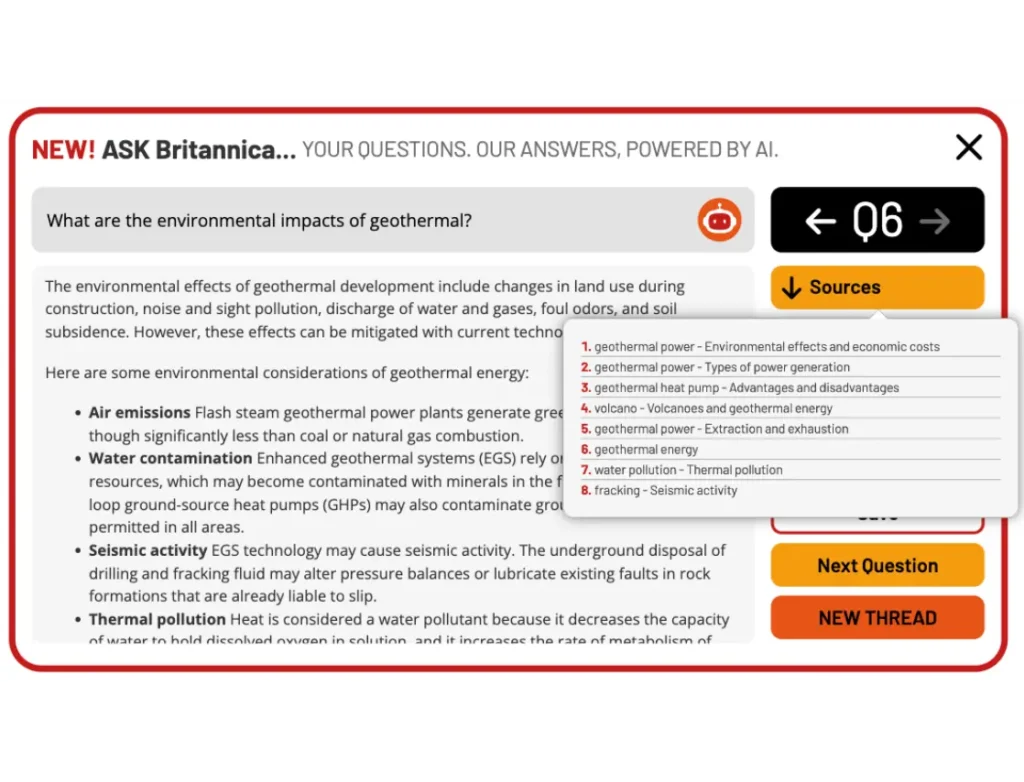
The Goal: Use AI to support better research, not to do the thinking for students.
5 Habits for Researching in an AI-Driven World
While AI technology evolves continuously, core research habits remain timeless. Encourage your students to practice these five steps:
-
Ask where the information came from.
Can the claim be traced back to an identifiable and credible source? If the source isn’t visible, that’s a reason to investigate further.
-
Verify before relying on it.
A confident answer is not evidence of an accurate answer. Important claims should be checked against authoritative sources.
-
Understand before citing.
Students should be able to explain what a source actually says, why it is credible, and how it relates to their research question before adding it to a bibliography.
-
Evaluate relevance, not just accuracy.
A real source can still be the wrong source. Students need to consider whether the evidence actually supports the question or argument they are making.
-
Keep thinking.
AI can help organize, summarize, and surface information, but students still need to analyze evidence, compare perspectives, identify limitations, and draw their own conclusions.
Preparing Students for the Research World They Actually Inhabit
Libraries and faculty aren’t trying to force students back to a pre-AI era. Instead, the goal is to equip students with tools to navigate the current digital landscape thoughtfully.
Even with AI, students still need to formulate research questions, evaluate sources and perspectives, take structured notes, synthesize evidence, and cite sources accurately. Those skills don’t become less important because AI is available. They become even more important because students now have another powerful source of information to evaluate.
Preparing students for research today means teaching them not simply how to find an answer, but how to question it, trace it, evaluate it, and decide whether the evidence supports it.
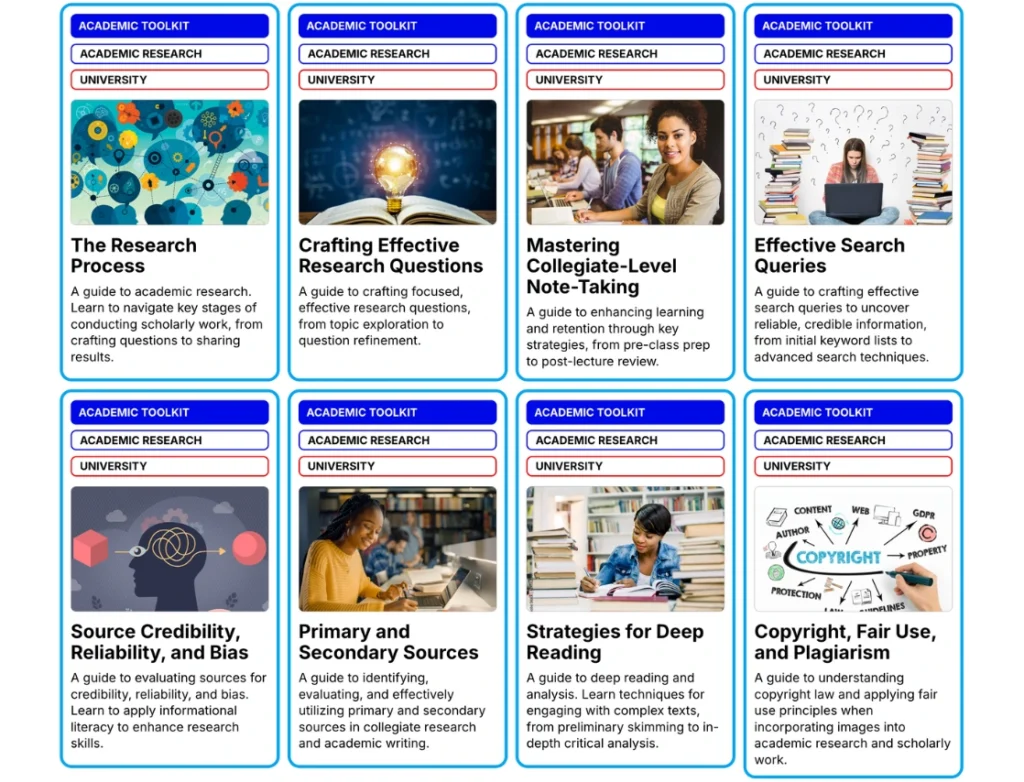
Put These Ideas Into Practice
Britannica’s open-access academic toolkits provide ready-to-use resources for students, faculty, and librarians covering source evaluation, research questions, effective searching, note-taking, citation, and other foundational research skills.

Recent Blog Posts

Read, Play, Connect: Bringing Early Literacy to Life with Britannica
Read More: Read, Play, Connect: Bringing Early Literacy to Life with Britannica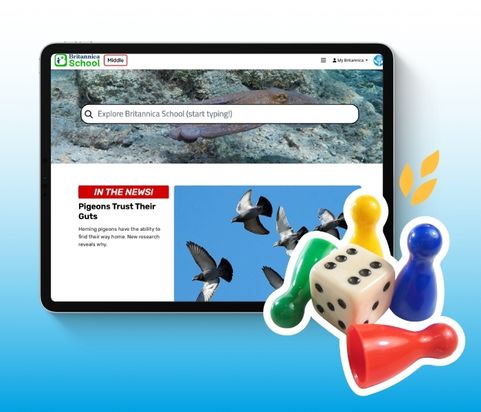
6 Easy Ways to Gamify Britannica School
Read More: 6 Easy Ways to Gamify Britannica School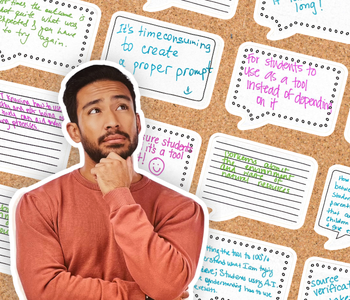
What Educators Really Think About AI: Insights from ISTE 2026
Read More: What Educators Really Think About AI: Insights from ISTE 2026
From 1776 to Today: The Big U.S. Timeline Quiz
Read More: From 1776 to Today: The Big U.S. Timeline Quiz
Using Britannica School and the World Cup to Score Big in the Classroom
Read More: Using Britannica School and the World Cup to Score Big in the Classroom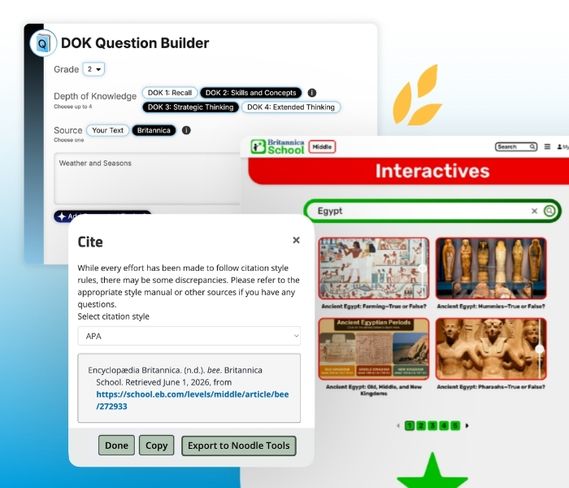
Teach Britannica, for Educators, with Love
Read More: Teach Britannica, for Educators, with Love
Summer Reading Ideas for Kids: Free Activities & Book List
Read More: Summer Reading Ideas for Kids: Free Activities & Book List
Practical Jokes or Practical Adaptations: Can You Find These Critters?
Read More: Practical Jokes or Practical Adaptations: Can You Find These Critters?
Join Our Newsletter
From tips and tricks to engaging activities, find
attention-grabbing content for tomorrow’s lesson.